
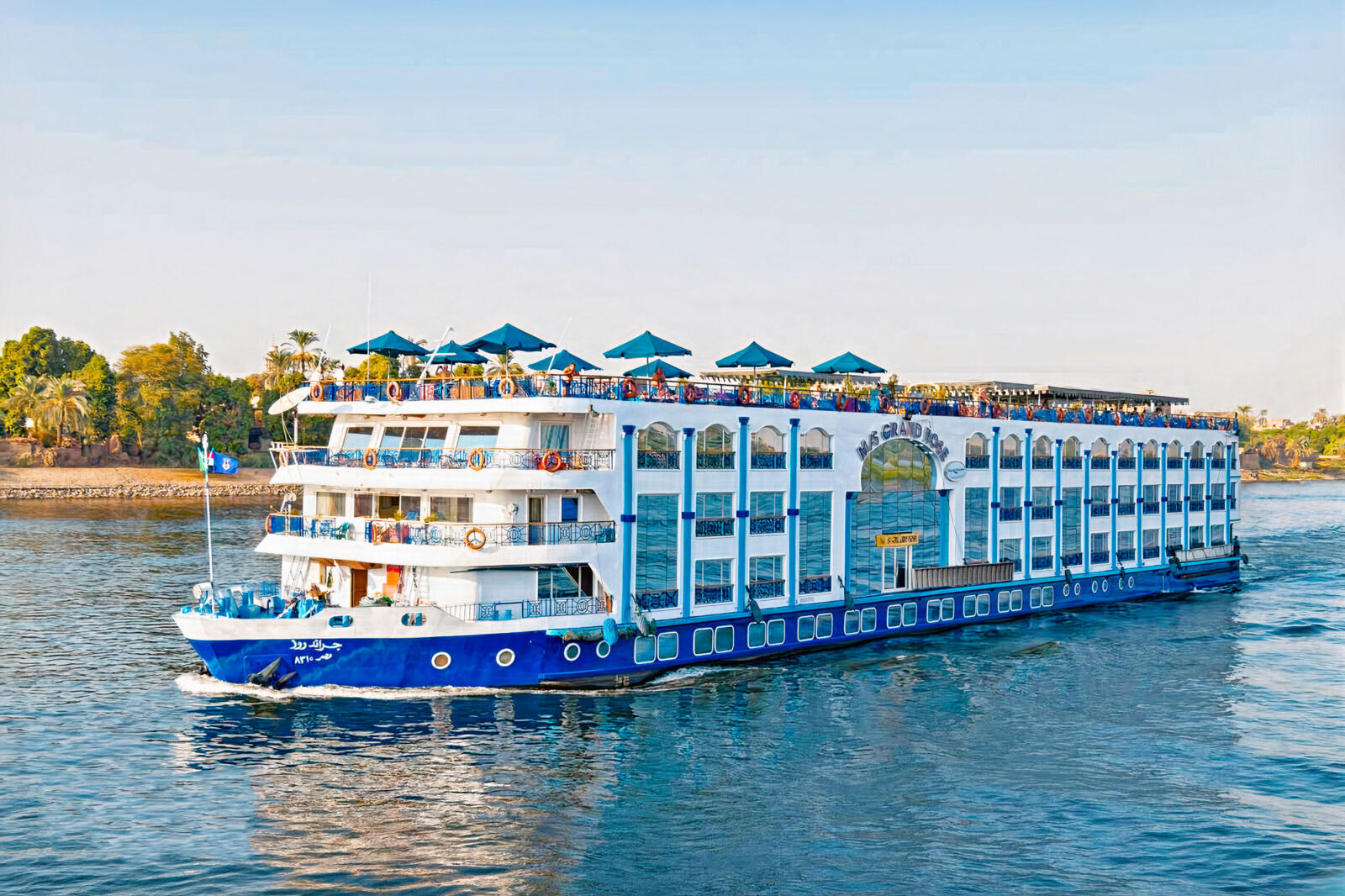
Booking a Nile cruise is one of the best decisions you can make in Egypt — but there are a few things worth knowing before you pay a deposit. After more than 28 years guiding on the Nile, here are the things we tell every guest.
Every cruise runs the roughly 220 km stretch between Luxor and Aswan. That is the only viable tourist route, and it holds the greatest concentration of temples on Earth. The real choice is not “which route” but direction, length and boat.
Three nights is the common minimum; four nights is more relaxed and our usual recommendation. Five to seven nights means a private dahabiya.
A big cruise ship is a comfortable floating hotel carrying 100–150 passengers. A dahabiya is a small traditional sailing boat (6–12 cabins) that drifts quietly and reaches banks the big ships cannot. Comfort and value, or intimacy and romance — that is the real trade-off.
Good cruises include your cabin, full-board meals and guided excursions. They often exclude some entrance fees, drinks, tips, Abu Simbel and the Luxor balloon. Budget cruises sometimes charge guiding and entry on top — so read the fine print.
Luxor→Aswan and Aswan→Luxor visit identical stops in reverse. Pick what fits your flights.
October to April is peak — and the best weather. December and New Year sell out months ahead. May to September is hot but cheap.
The gap between a tired three-star boat and a well-run one is wide at a similar price. Read recent reviews rather than choosing on price alone. We only place guests on boats we would put our own families on.
Budget for gratuities for crew and guides, and for drinks on board, which are usually extra.
Cruises cover Luxor and Aswan, not the Pyramids. Add 2–3 days in Cairo for Giza and the Grand Egyptian Museum before or after.
A local Egyptologist-run team gives better value and personal service than an international reseller — and someone who knows every boat.
Read our full Nile cruise planning guide, browse our Nile cruises, or send us your dates for a personalised quote within 24 hours.